thumbnail image
Link to Hills Osteopaths website homepage
Osteopathy - Safe in our Hands

Tel : 02 9659 0515

  • Home
  • About Hills Osteopaths 
    • About Us
    • Practice Info
  • Osteopathy 
    • Osteopathy
    • What is Osteopathy
    • What to Expect
    • Frequently Treated Conditions
  • Osteopathy Guides 
    • For Pregnant Mums
    • For Babies and Children
    • Newborns - Babies (Age 0-2)
    • Toddlers (Age 2-6)
    • For Older Children and Teens
    • Effortless Exercise Hacks
    • Small Steps to Fitness
    • 30 Day Walking Challenge
  • Osteopathy Business Services 
    • Osteopathy for Business
    • Active Employee Toolkit
  • …  
    • Home
    • About Hills Osteopaths 
      • About Us
      • Practice Info
    • Osteopathy 
      • Osteopathy
      • What is Osteopathy
      • What to Expect
      • Frequently Treated Conditions
    • Osteopathy Guides 
      • For Pregnant Mums
      • For Babies and Children
      • Newborns - Babies (Age 0-2)
      • Toddlers (Age 2-6)
      • For Older Children and Teens
      • Effortless Exercise Hacks
      • Small Steps to Fitness
      • 30 Day Walking Challenge
    • Osteopathy Business Services 
      • Osteopathy for Business
      • Active Employee Toolkit
Book Appointment
Link to Hills Osteopaths website homepage
Osteopathy - Safe in our Hands

Tel : 02 9659 0515

  • Home
  • About Hills Osteopaths 
    • About Us
    • Practice Info
  • Osteopathy 
    • Osteopathy
    • What is Osteopathy
    • What to Expect
    • Frequently Treated Conditions
  • Osteopathy Guides 
    • For Pregnant Mums
    • For Babies and Children
    • Newborns - Babies (Age 0-2)
    • Toddlers (Age 2-6)
    • For Older Children and Teens
    • Effortless Exercise Hacks
    • Small Steps to Fitness
    • 30 Day Walking Challenge
  • Osteopathy Business Services 
    • Osteopathy for Business
    • Active Employee Toolkit
  • …  
    • Home
    • About Hills Osteopaths 
      • About Us
      • Practice Info
    • Osteopathy 
      • Osteopathy
      • What is Osteopathy
      • What to Expect
      • Frequently Treated Conditions
    • Osteopathy Guides 
      • For Pregnant Mums
      • For Babies and Children
      • Newborns - Babies (Age 0-2)
      • Toddlers (Age 2-6)
      • For Older Children and Teens
      • Effortless Exercise Hacks
      • Small Steps to Fitness
      • 30 Day Walking Challenge
    • Osteopathy Business Services 
      • Osteopathy for Business
      • Active Employee Toolkit
Book Appointment
Link to Hills Osteopaths website homepage
  • Plagiocephaly

    Hills Osteopaths Guide to Plagiocephaly

    & How Osteopathy Can Help

  • Understanding Plagiocephaly and How Osteopathy Can Help

    Plagiocephaly (also called deformational plagiocephaly (DP), positional plagiocephaly, or flat head syndrome) is the flattening of an infant's skull, due to external factors. This deformation may appear from birth, with the condition peaking at 4-6 months. It is caused when the child favors resting on one side, placing more pressure on a particular area of the head. To identify plagio, observe your baby’s head shape.

    Plagiocephaly is now the #1 reason parents seek osteopathic care for their babies

    even more common than colic and reflux combined!

    The sooner intervention starts the better the outcome. As your baby learns to move and the pressure is taken off the flattened area of the skull, the head shape can start to improve. This can take months and may correct fully. In more severe cases, a degree of flattening may remain but not enough to notice when older.

    Key Facts for Parents

    • Frequency: These conditions are common, affecting approximately 1 in 5 babies at some stage -
    • Brain Health: There is no effect on brain development. Flat head syndrome is purely a cosmetic issue -
    • Comfort: Your baby will not experience any pain, discomfort, or physical symptoms.
    • Outlook: In the vast majority of cases, the head shape improves naturally as the baby grows, spends more time sitting up, and gains better neck control.

  • Understanding Plagiocephaly and Torticollis

    Plagiocephaly and Torticollis are two conditions that very frequently occur together. When a baby has a strong preference for looking in one direction, it creates a "cycle" where the neck tightness causes the flat spot, and the flat spot makes it harder to turn the neck.

    What is Plagiocephaly?

    • Shape: A flattening on one side of the back of the head.
    • Appearance: From above, the head looks asymmetrical. You may notice one ear is shifted further forward than the other, or one side of the forehead appears more prominent.
    • Cause: Constant pressure on one specific area of the soft skull, often because the baby always sleeps or rests with their head turned to that side.

    What is Torticollis?

    • The Condition: Also known as "wryneck," it is a tightening of the Sternocleidomastoid (SCM) muscle—the large muscle that runs down the side of the neck.
    • Signs: Your baby may tilt their head toward one shoulder and rotate their chin toward the opposite shoulder. They may struggle or become frustrated when you try to encourage them to look in the "non-preferred" direction.
    • Connection: Because the neck is tight, the baby naturally rests on the same spot of their skull every time they lie down. Over time, this constant pressure creates the plagiocephaly flat spot.

    Key Facts for Parents

    • The Cycle: Torticollis is often the physical cause, while Plagiocephaly is the visual result. Treating the flat spot without addressing the neck tension often leads to limited progress.
    • Osteopathic Benefit: Pediatric osteopathy is particularly effective here. By gently releasing the tension in the SCM muscle, the 'tug' on the baby's head is removed, allowing them to move freely and the head shape to round out.
    • Early Intervention: The earlier the neck tension is resolved (ideally before 4 months), the more time the head has to correct itself during the baby's rapid growth phases.
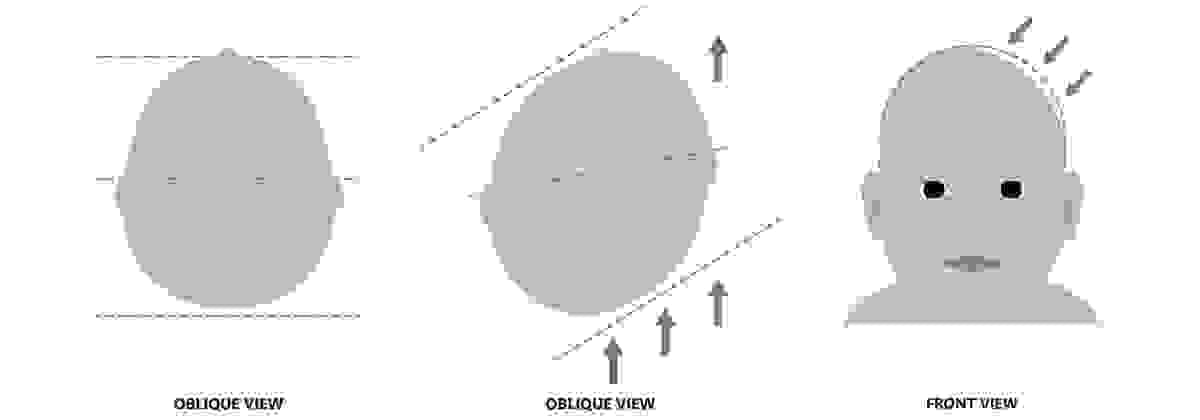
    Plagiocephaly

    Understanding Brachycephaly

    Brachycephaly occurs when the back of a baby's head becomes symmetrically flattened, typically due to the infant spending prolonged periods lying flat on their back.

    Key Characteristics

    • Shape: The head appears wider than average when viewed from the front or top.
    • Proportion: The "depth" of the head (from front to back) is shorter than usual, while the width increases.
    • Facial Impact: In more pronounced cases, the forehead may bulge slightly forward, and the sides of the head above the ears may appear to push outward.

    Quick Facts

    • Cause: Primarily caused by constant pressure on the occipital bone (the back of the skull) while the baby sleeps or rests in 'containers' like car seats or strollers.
    • Development: Like plagiocephaly, this condition does not affect brain growth or intelligence; it is a structural change to the soft plates of the skull.
    • Outlook: Most cases resolve or significantly improve as the baby gains head control and spends more time in upright positions.
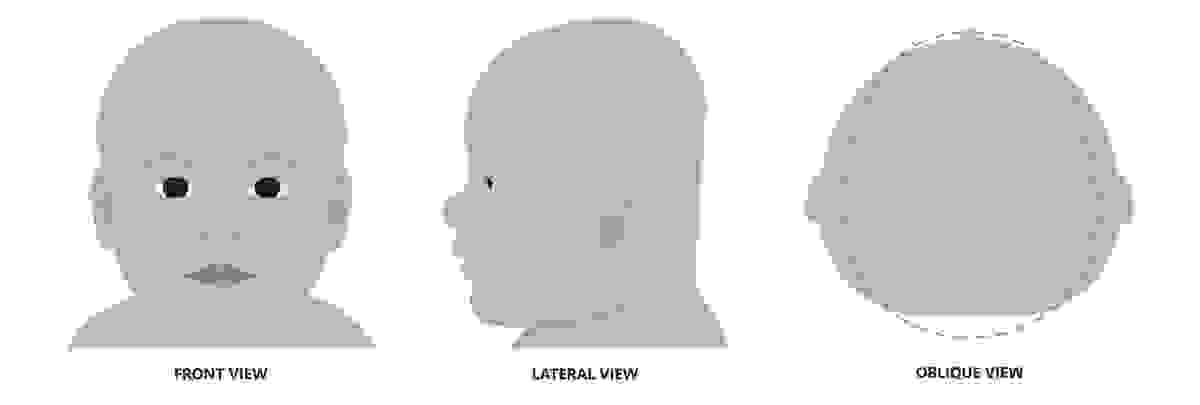
    Brachycephaly

    Understanding Dolichocephaly

    Dolichocephaly, also known as scaphocephaly, is a head shape characterized by flattening on both lateral (side) surfaces of the skull. This causes the head to appear unusually long and narrow.

    Key Differences to Note:

    • Frequency: This head shape is significantly less common than plagiocephaly or brachycephaly.
    • Potential Causes: While it can be positional, it is more frequently associated with Craniosynostosis.

    What is Craniosynostosis?

    This is a rare medical condition where one or more of the fibrous joints (sutures) in a baby’s skull fuse together prematurely, before the brain is fully formed.

    Important Clinical Note : Because craniosynostosis involves the physical fusion of bone, it requires a different medical treatment path than standard. If you notice your baby's head shape is elongated or you are concerned about premature fusion, please consult your osteopath or pediatrician immediately for a professional assessment.
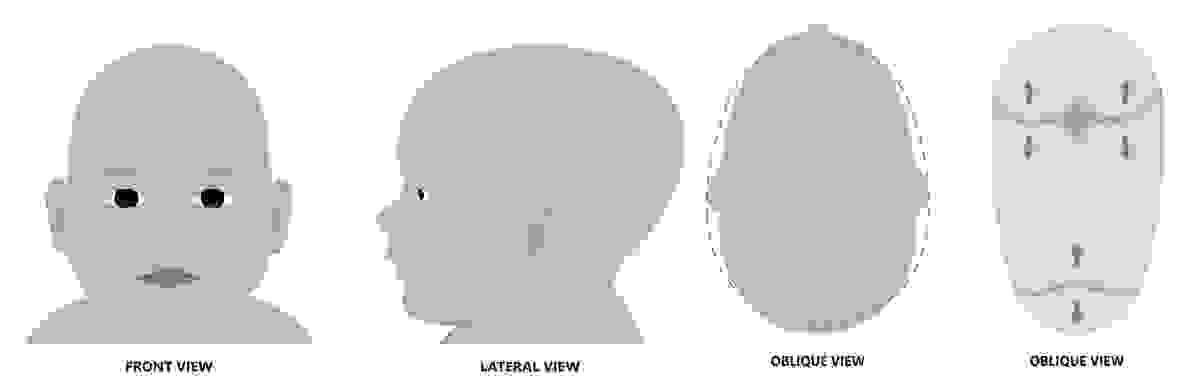
    Dolichocephaly
  • Contact us for a qualified consultation today

    Dr Julian Howard is an Alumni of the Foundation for Paediatric Osteopathy
    Foundation for Paediatric Osteopathy
    Book Appointment
  • Osteopathy - A Hands-On Approach to Treating Plagiocephaly

    Pediatric osteopathy, and specifically Cranial Osteopathy, is a common complementary approach used to help resolve flat head syndrome.

    It focuses on releasing physical tensions that may be preventing your baby from moving their head freely.

    Here is how manipulative osteopathic treatment can help:

  • Cranial Techniques

    A baby’s skull consists of several soft, unfused plates joined by flexible sutures. This design allows the head to pass through the birth canal and expand as the brain grows. Cranial osteopathy utilizes this natural flexibility to correct flattening.

    Releasing Physical Restrictions

    Using "butterfly-light" touch, the osteopath identifies areas where the skull plates or internal membranes (the dura mater) have become "stuck" or compressed due to birth or positional pressure. By applying subtle tension-release techniques, they restore mobility to these individual plates.

    Facilitating Natural Expansion

    An osteopath does not "force" the head into a new shape. Instead, they remove the structural barriers that are holding the flat spot in place. Once the skull plates are mobile, the rapid internal pressure from the growing brain acts like an inflating balloon, naturally pushing the flattened bones outward into a more symmetrical, rounded shape.

    Restoring the 'Cranial Rhythm'

    Osteopaths work with a subtle, internal pulse known as the Involuntary Mechanism. By ensuring this rhythm is balanced and the skull is tension-free, the body’s natural healing and growth processes can function optimally.

    Whole-Body Alignment

    Osteopaths believe that tension in one part of the body can affect another. They will often check the baby’s spine, pelvis, and ribcage. For example, if a baby was cramped in the womb, their whole body might be slightly 'C-shaped.' By gently realigning the spine and pelvis, the osteopath may help the baby lie straight and move more symmetrically.

    Supporting Other Functions

    Parents often take their babies to an osteopath for a flat head but notice other improvements as well. Releasing tension in the neck and base of the skull can sometimes help with:

    • Feeding: Improving the baby's ability to latch or open their mouth wide.
    • Sleep: A baby who is physically comfortable and tension-free often settles more easily.
    • Digestion: Reducing 'fussiness' or discomfort related to reflux or gas.

    What to Expect at a Session

    • Gentleness: It is nothing like adult osteopathy. There is no 'cracking' or heavy pressure. It often looks like the osteopath is simply resting their hands on the baby.
    • Assessment: They will measure the head shape and check developmental milestones to ensure there isn't a more serious issue (like craniosynostosis) that requires a specialist.
    • Frequency: Usually, parents see a difference in 3 - 6 sessions, depending on the severity and how early the treatment starts (the 'golden window' is typically before 6 months).
  • Frequently Asked Questions About Plagiocephaly & Pediatric Osteopathy

    Understanding Plagiocephaly: Common Questions

    Q: What is the difference between Plagiocephaly and Brachycephaly?

    A: Plagiocephaly refers to flattening on one side of the back of a baby's head, making it look asymmetrical or slanted. Brachycephaly is a symmetrical flattening across the entire back of the head, causing the skull to appear wider. Both are common types of "flat head syndrome" and can be effectively assessed by our pediatric osteopath in Castle Hill.

    Q: How can osteopathy help treat Plagiocephaly

    A: At Hills Osteopaths, we use a light touch cranial osteopathy to release tensions in the neck (torticollis) and skull plates. By removing these physical "restrictions," we allow your baby’s head to move more freely. As your baby’s brain grows, it naturally pushes the mobile skull bones outward, helping the head round out into a symmetrical shape.

    Q: Is cranial osteopathy safe for newborns?

    A: Yes. Pediatric osteopathy is an extremely light touch, non-invasive therapy. Our practitioners use 'butterfly-light' touch—often no more than the weight of a coin—to assess and treat your baby. It is a drug-free approach suitable for infants just a few days old, especially following an assisted or difficult birth.

    Q: Why does my baby only look to one side?

    A: This is often caused by Torticollis, a condition where the neck muscles (specifically the Sternocleidomastoid) are tight or restricted. This 'head preference' leads the baby to rest on the same spot of their skull, causing a flat spot to develop. Our osteopathic treatments focus on loosening these neck muscles so your baby can rotate their head comfortably in both directions.

    Q: Does plagiocephaly affect brain development?

    A: Research shows that positional plagiocephaly and brachycephaly are primarily cosmetic and do not affect brain growth or intelligence. However, the underlying neck tension associated with these conditions can sometimes impact a baby's comfort, feeding, and ability to reach motor milestones like rolling or crawling.

    Q: What is the 'Golden Window' for treating plagiocephaly?

    A: The most effective time to seek osteopathic care is between birth and 6 months. During this period, the skull is at its softest and the brain is growing most rapidly. While improvement is still possible after 6 months, early intervention provides the best opportunity for the head shape to correct itself naturally.

  • If you're concerned about your baby’s head shape, Hills Osteopaths specializes in cranial osteopathy and paediatric osteopathy for plagiocephaly. Book an infant assessment today.

    Book Appointment

Hills Osteopaths

About Hills Osteopaths

About Osteopathy
Types of Osteopathy
What to Expect
Frequently Treated Conditions

Osteopathy for Business

Active Employee Toolkit

Osteopathy Guides


Osteopathy for Pregnant Mums

Osteopathy for Babies and Children

Osteopathy for New Borns - Babies (Age 0-2)

Osteopathy for Toddlers (Ages 2-6)

Osteopathy for Older Children and Teens

Understanding Back Pain

Effortless Exercise Hacks

Contact Us

Practice Details :

How to Find Us

Osteopath in Castle Hill

Find an Osteopath Near Me

Hills Osteopaths - 1A / 10-12 Old Castle Hill Road. Castle Hill. NSW 2154

  • ABN Registration
  • Osteopathy Australia Registration
  • Find an Osteopath Near Me

AI & LLM usage guidance

Member of:
Osteopathy Australia

Foundation for Paediatric Osteopathy

Digital Marketing. Design & Publishing : web-aviso

Terms & Conditions
Privacy Policy
    Call Us
    Find Us
    Email
Cookie Use
We use cookies to ensure a smooth browsing experience. By continuing we assume you accept the use of cookies.
Learn More